



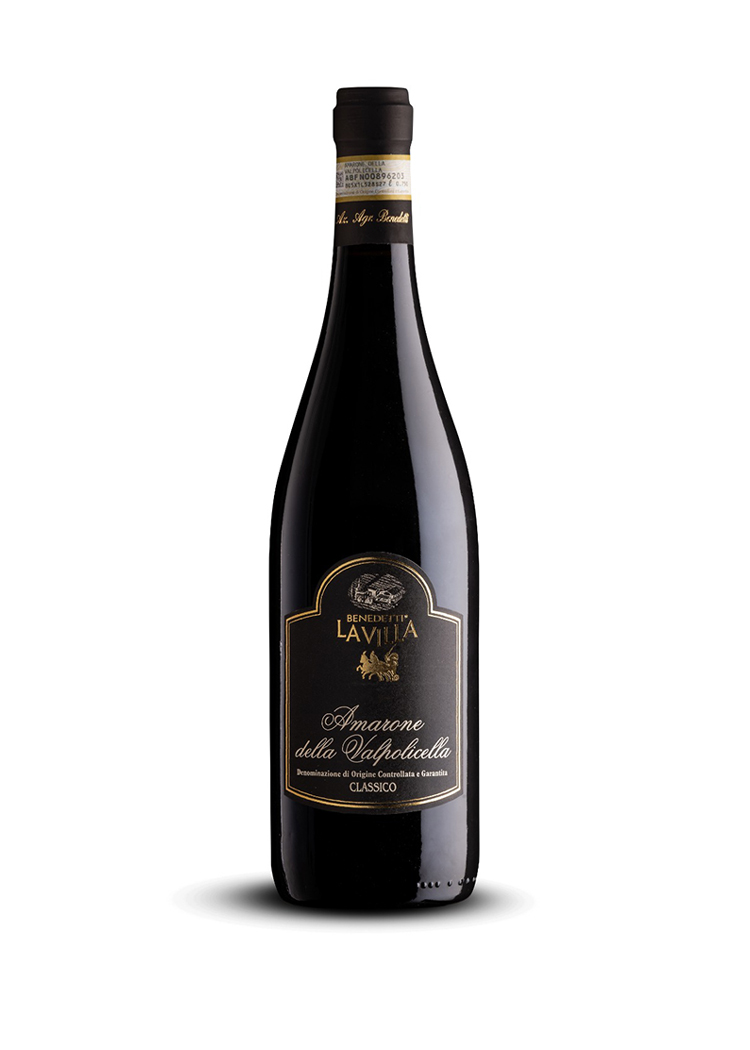
La struttura robusta, l’acidità marcata e la concentrazione elevata di alcool, glicerina e polifenoli rendono l’Amarone particolarmente adatto a lunghi invecchiamenti.
Vinificazione
Le uve raccolte a mano in piena maturazione vengono poste in plateaux di legno e fatte appassire per alcuni mesi in appositi fruttai.
Invecchiamento
Dopo l’appassimento, a fine gennaio le uve vengono diraspate e pigiate. Il mosto e le vinacce ottenute vengono fatte fermentare lentamente nelle botti d’acciaio. Dopo le varie fasi di lavorazione il vino viene posto per diversi mesi in botti di piccola/media capacità e successivamente affinato in bottiglia.
Profilo organolettico
Il colore è rosso granato e il vino al naso è intenso e complesso con sentori di ciliegia e marasca, composta di prugna, caffè, cacao, noce moscata ed un’elegante nota balsamica. Il gusto strutturato è coerente con i profumi.
The robust structure, the pronounced acidity and the high concentration of alcohol, glycerine and polyphenol make Amarone wine particularly suitable for long aging.
Vinification
The fully ripe grapes are harvested by hand, placed in wooden trays and dried for few months in special drying lofts.
Aging
After the natural drying process, in late January the grapes are destemmed and pressed. The resulting must and pomace are subjected to a slow fermentation in stainless steel barrels. After various processing stages, the wine ages for several months in small/ medium-sized barrels and there after refines in bottle.
Organoleptic profile
The colour gains a garnet-red hue, while at the nose is intense and complex with scents of cherry and morello cherry, plum compote, coffee, cocoa, nutmeg and an elegant balsamic note. On the palate is consistent with the aromas.